Best One Piece TCG Cards to Invest In Right Now (2026 Honest Picks)
Every "best One Piece TCG cards to invest in" list reads the same: someone slaps Gear 5 Luffy, Yamato, and Shanks at the top, calls it a day. Useful if you already follow the format. Less useful if you're trying to figure out which cards have staying power past the next set release.
This list is built differently. The picks below are cards worth holding through 2026. A mix of leaders that anchor competitive decks, alt arts with proven collector demand, and OP-01 originals that aren't going anywhere. Each pick has real reasoning, including why it could go wrong.
None of this is financial advice. TCG cards are illiquid, hype-cycle prone, and dependent on a small collector base. But if you're going to put money into One Piece cards anyway, here's where the smart money tends to look.
The 8 Picks
1.Monkey D. Luffy (Leader)
OP-01 · Romance Dawn
The face of the format. Luffy Leaders have anchored competitive decks since OP-01 dropped, and the original printings still hold collector appeal even as newer Luffy Leaders rotate in. The Red/Green Leader from Romance Dawn is the most recognized printing among the early-adopter wave that defined the format. Risk: One Piece prints aggressively, and Luffy is in basically every set. Pick the printings collectors actually chase, not every Luffy on a shelf.
2.Roronoa Zoro Super Rare
OP-01 · Romance Dawn
Zoro is the second-most popular character in the franchise and one of the most consistently demanded names in the TCG. The OP-01 Super Rare printing is the original chase from the first set, which gives it real collector cachet beyond just play value. Print runs were small in OP-01 compared to later sets. Risk: if Bandai reprints OP-01 cards in an anniversary product, OP-01 supply expands and prices soften.
3.Eustass "Captain" Kid Super Rare
OP-01 · Romance Dawn
Kid is one of those characters whose card prices outperform the surrounding hype. He's not the most talked-about Supernova, but his cards consistently sell. The OP-01 Super Rare benefits from being a first-print SR of a popular character. Less explosive than the headline names, more reliable than the deep-cut SRs. Risk: harder to flip quickly than Luffy or Zoro, so longer time to sale if you ever need to move it.
4.Dracule Mihawk Super Rare
OP-01 · Romance Dawn
Mihawk has cross-audience appeal — competitive players want him for Warlord decks, casual collectors want him because he's a fan favorite. The OP-01 SR has the cleanest early-format art and benefits from the limited OP-01 print run. He's also less likely to be reprinted in deck boxes or starter sets than the Straw Hats, which protects the existing supply. Risk: if Mihawk gets a new flagship SR in a later set, the OP-01 version becomes less central.
5.Boa Hancock Super Rare
OP-01 · Romance Dawn
Boa Hancock is one of the highest-demand individual characters across One Piece collectibles full-stop, not just in the TCG. Her OP-01 Super Rare consistently sells faster than other SRs at similar grades. Crossover demand from anime collectors who don't play the TCG keeps a floor under prices. Risk: she gets multiple SR printings across sets, so supply expands faster than for some other names.
6.Kaido Super Rare
OP-01 · Romance Dawn
Kaido cards moved hard during the Wano arc finale and have held a healthy floor since. The OP-01 Purple Kaido SR is the original first-set chase for the character and benefits from being instantly recognizable to anime viewers who came in late. Less competitively played than some other Leaders, but the collector demand carries it. Risk: post-Wano, narrative attention has shifted to other antagonists. Kaido cards depend on collector momentum rather than tournament play.
7.Sealed OP-01 Romance Dawn Booster Box
Sealed · The set that started it all
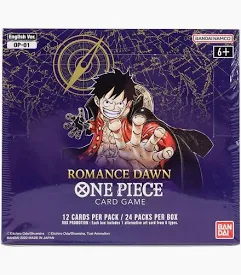
Sealed Romance Dawn boxes are the closest One Piece equivalent to early Pokemon Base Set sealed product. The set introduced the format globally and is the only set where every printing is the original. Reprints have been limited compared to other early TCGs, and Bandai's general posture is that anniversary reprints come slowly. Sealed product is also the lower-effort hold — no condition risk, no grading. Risk: if Bandai does an anniversary product that includes Romance Dawn reprints, sealed Romance Dawn supply still has value but loses its uniqueness premium.
8.Secret Rare Leaders from recent sets
OP-07 through OP-09 · Modern chase
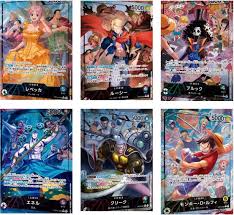
Secret Rare Leaders are the highest-end chase cards in each modern set. They combine play value (you can actually run them) with collector value (low pull rate, one-of-one feel). The trick is being selective: not every SEC is a hold. Pick SEC versions of characters who already have proven name demand — Luffy, Zoro, Yamato, Shanks — and skip the ones whose value depends entirely on tournament play. Risk: SEC pull rates have been increasing as Bandai prints more sets. Modern SEC supply grows faster than vintage.
Where People Get Investment Picks Wrong
Most One Piece TCG investment lists fall into one of two traps. The first is recency bias: picking whatever set just dropped and assuming this one will be the next Romance Dawn. The second is the inverse: only recommending OP-01 originals and ignoring that the format has expanded enormously. The picks above try to span the spectrum. Singles from OP-01 carry vintage cachet but are still affordable. Sealed OP-01 is the boring compounder. Modern SEC Leaders are the bet on whichever character keeps mattering. Pick across the spectrum if you have the budget, pick what matches your conviction if you don't.
How to Actually Buy These
For singles, eBay and TCGPlayer are where most real price discovery happens. Filter to sold listings and look at the last 60 days. Anything currently listed at 30%+ above the recent sold average is overpriced. For sealed product, watch for sealed authenticator services if you're buying anything above $200. Resealed boxes are a real problem across all TCGs, including newer ones. A $5-10 authentication adds meaningful confidence on a $150+ purchase. And before buying anything from this list, run the card through OnePieceCardValue to see its current market price and recent trend before you commit.
Frequently Asked Questions
Are One Piece TCG cards a good investment in 2026?
Should I buy graded or raw One Piece cards for investment?
Is sealed One Piece product better than singles?
Will One Piece TCG ever rival Pokemon prices?
How long should I hold One Piece TCG investments?
How do I check the current value of a One Piece TCG card?
Closing Thought
The best One Piece TCG cards to invest in 2026 aren't the ones trending on Twitter today. They're the ones with provable scarcity, persistent character demand, and a story that doesn't depend on the next hype cycle. Pick from the list above, hold long, and check back in five years.